

Conservation
Rewilding and the Raven: How Habitat Projects Are Reshaping UK Populations
October 10, 2026
Twenty years ago, hearing a raven in the English Midlands meant a long drive west. Now the deep cronk turns up over retail parks, along disused railway cuttings and above young woodland on the edge of towns that have not held a breeding pair in living memory. The bird has done most of the work itself. It has had help, though: more trees, fewer traps, less poison and a growing willingness to let land go a little wild. The raven's map is being redrawn county by county — not everywhere, and not without argument.
A bird pushed to the western edges
Ravens were once common across Britain, London included. Centuries of bounties, gamekeeping, poisoning and egg collecting squeezed them back to the cliffs and crags of the west and north: the Scottish Highlands and islands, upland Wales, the Lake District, Dartmoor and the Cornish coast.
Recovery came slowly. Legal protection for wild birds arrived in stages through the twentieth century, the number of full-time keepers fell sharply after the First World War, and systematic poisoning became rarer. From the 1980s the change was plain. Ravens filled the ground between their old strongholds — the Welsh border, the southern Pennines, the Peak District — then moved into counties that had not seen a nest for generations.
That history is worth remembering, because the raven is not a bird of empty wilderness. It is a long-lived, adaptable scavenger that needs a ledge or a tall tree, something dead to eat, and a reasonable chance of being left alone.
Woodland regeneration: slow-release nesting habitat
Cliffs and quarries remain classic nest sites, but as woodland matures ravens increasingly use tall trees — Scots pine, oak, beech, larch — choosing a heavy fork or a big lateral limb high up with a clear flight path in. Plantations planted during the last century, whatever their faults, gave birds in Wales and Scotland a supply of nest trees, and that is part of why the species never retreated entirely to the coast.
Why the timescale matters
Habitat work for ravens is a slow business. A wood planted this winter may not carry its first raven nest until the 2070s. That is no problem for the birds, which live for well over a decade and often keep both mate and territory. It does mean that woodland creation should be judged over decades rather than grant cycles. The scrubby edges, sheltered valleys and older trees are doing the work now; the saplings are a promise.
Uplands: carrion, grazing and unintended benefits
In the uplands, reduced sheep numbers and a willingness to let scrub and woodland return have two effects ravens notice. More nest sites, and more carrion. Ravens are scavengers before they are hunters, and a dead deer or a winter-killed sheep is a serious meal at the time of year when the birds are already breeding. In Britain ravens are among our earliest nesters, laying from late February, sometimes in January in mild western districts.
They also take whatever people leave lying about: roadkill, afterbirth, food waste, the leavings of game shoots. That opportunism explains why the species has coped so well with change, and why an honest account of rising raven numbers includes farms, roads and landfill as much as rewilding. Habitat projects help at the margins; a generalist's ability to eat almost anything does the rest.
Where the map is shifting, region by region
Raven fortunes are not uniform across Britain. The broad picture:
- Scotland. Widespread and long established, with strong populations in the Highlands, the Southern Uplands and the islands. Numbers have risen over recent decades, and this is where the argument about control is loudest.
- Wales. A genuine stronghold — Snowdonia, the Cambrian Mountains, the coast — with birds increasingly nesting in lowland woods and on pylons. Ravens are a familiar sight over Cardiff and the Valleys.
- Northern England. The Lake District, the North Pennines and Northumberland hold good numbers, and the range is pressing south and east into the Yorkshire Dales, the Dark Peak and the northern Midlands.
- Midlands and East. Breeding has returned to parts of the Midlands, the Chilterns and East Anglia in recent years, often on pylons, in quarries or in isolated tall trees rather than in woodland.
- South and South West. Dartmoor, Bodmin Moor and the Cornish cliffs remain the core, with birds spreading through Devon and Somerset farmland and into Dorset and Wiltshire.
The pattern is consistent: birds saturate the uplands first, then move down river valleys and along roads into lowland England, using whatever is tall and quiet.
The argument that will not settle
Not everyone welcomes the recovery. Upland managers, and some conservationists working on waders, argue that higher raven numbers add pressure on curlew, lapwing and golden plover, and on lambs in some hill flocks. Others point out that these ground-nesting birds were declining long before ravens returned, and that drainage, overgrazing, forestry and other predators all play a part.
Both things can be true. Raven predation can matter enormously at a local scale, especially where wader numbers are already low, while the wider decline has bigger causes. Licensed control does take place in some areas, usually to protect livestock or vulnerable ground-nesting birds, and it is understandably sensitive. Follow the debate long enough and you learn to distrust anyone offering a single cause — in either direction.
Reading the signs
If you watch birds, the raven's spread gives you something to contribute. A few pointers:
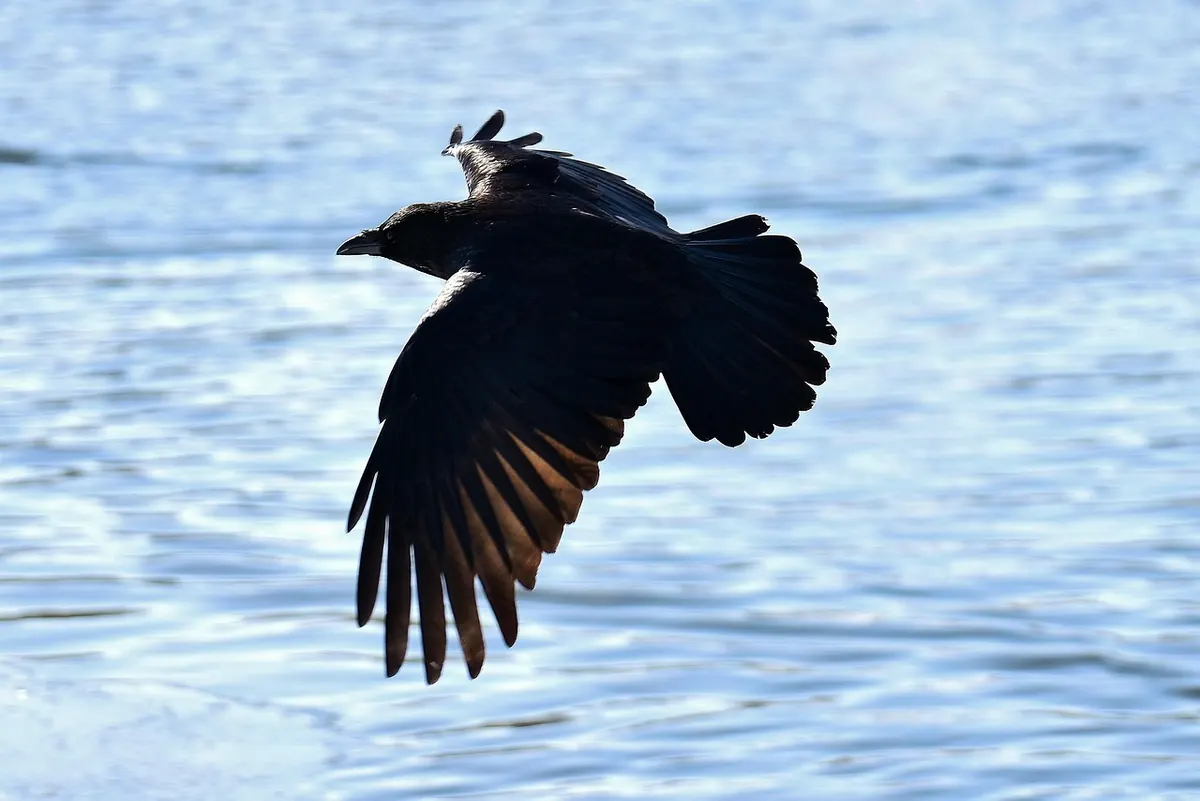
- Separate raven from carrion crow by silhouette as much as size: wedge-shaped tail, heavy bill, shaggy throat, slower and more deliberate wingbeat. Crows flick and flap; ravens row.
- Listen as well. The cronk is far deeper than a crow's harsh caw, and ravens run through a wide range of knocking and gurgling sounds.
- Look up in late winter. Tumbling, rolling display flights happen in January and February, before most birds have begun nesting.
- Report colour-ringed birds. Note which leg carries the ring, the colours, and the order from top to bottom, then send the details to the British Trust for Ornithology.
- Keep your distance from nest sites between January and June. Ravens are wary and slow to settle, and a photographer on a crag can end a breeding attempt.
Practical ways to help
Ravens need little from us beyond space and a functioning landscape, and the places that suit them suit plenty of other species too. If you want to do something useful:
- Record what you see. Send sightings to your county bird recorder or log them on BirdTrack. Distribution data drives conservation decisions, and the raven's frontier is still moving.
- Report colour rings and unusual nest sites — pylons, quarries, isolated trees — to your local records centre or wildlife trust. It is cheap, genuinely useful information.
- Back long-term habitat work. Native woodland, scrub, wet flushes and unimproved pasture with a bit of mess left in it will carry ravens and curlews alike. A small regular donation to a local wildlife trust or woodland group goes further than you might expect.
- Give nesting birds room. Walk on the path, not the crag, and keep dogs close through spring.
- Report suspected persecution. If you find a poisoned bait or a trap that looks illegal, do not touch it. Contact the police and the RSPB's investigations team, note what you saw and where, and leave the evidence handling to them.
Rewilding has not conjured a new raven population out of nowhere. It has tilted the odds in favour of a bird that was always ready to move back, given half a chance and a legal footing. The cronk drifting over the next county boundary is the sound of that happening.
Photo: holzijue / Pixabay
Related posts
More stories you’ll love reading