

Conservation
Nesting Ravens: A Checklist for Watching Breeding Pairs Without Causing Disturbance
September 18, 2026

Ravens are among the earliest birds to nest in the UK. By the time many songbirds are pairing up, ravens may already be sitting on eggs. That makes them fascinating to watch, but it also means the season for careful, distant observation starts earlier than many people expect. A nesting pair can be disturbed by a well-meaning photographer, a curious walker, or a drone long before anyone realises there is a problem. This checklist sets out what to look for and how to behave, season by season.
Before you go: know the law and the land
Ravens are protected under the Wildlife and Countryside Act 1981. It is an offence to intentionally kill, injure or take a wild raven, and to damage or destroy an active nest or its eggs. Some species receive extra protection under Schedule 1 of the Act, which makes it an offence to disturb them at or near the nest, even recklessly. Ravens are not generally on that schedule across the whole UK, but the law varies and other protected species may nest nearby. Treat every nest as if it has the highest level of protection. If you are unsure, assume you need a licence for close approach or photography.
Access matters too. Many raven nests are on cliffs, in quarries, on tall trees or on pylons. The land may be private, a Site of Special Scientific Interest, or a nature reserve with its own rules. Check before you set out. If in doubt, watch from a public right of way and keep moving. For legal advice on a specific site, contact the relevant statutory body or a solicitor; this is general guidance only.
Late winter: prospecting and nest building
From January into February, ravens are often already repairing or building nests. Look for pairs flying together, tumbling in display, or carrying sticks. You may see one bird sitting on a ledge while the other circles. The nest itself is a bulky platform of sticks, lined with wool, hair and moss.
This is the time to establish a viewing distance that works. In open country, several hundred metres is sensible. If the birds stop what they are doing, look towards you, or move away, you are too close. Use binoculars or a telescope. A scope from a road or a marked path is ideal. Do not climb towards a ledge for a better view. Repeated visits can cause a pair to abandon a site before eggs are laid.
Early spring: incubation
By March and April, the female is usually incubating. She sits for roughly three weeks while the male brings food. You may see a changeover: the male arrives, the female leaves, and they swap quickly. The sitting bird is vulnerable to cold, rain and human interruption. If she leaves the nest because of you, the eggs can chill.
Keep your distance and keep your visit short. Ten minutes at a scope is plenty. If you see the sitting bird crouch lower, freeze, or slip off the nest, back away immediately. Do not use playback to bring the male closer. Do not fly a drone. Do not approach the nest ledge, even if the birds seem quiet.
Late spring: chicks and early fledging
Chicks hatch after about three weeks and stay in the nest for five to six weeks. This is the busiest period for the adults. They make frequent food runs, and the chicks beg loudly as they grow. You may hear them before you see them. Whitewash on the cliff face or below the nest is a clue that young are present.
At this stage, the adults are highly responsive to perceived threats. They may alarm call, circle overhead, or dive at intruders. If you see any of that, retreat. A group of watchers is more disturbing than one person, so split up or move on. Keep dogs on a lead. Avoid stopping directly below the nest; passing traffic and walkers can cause repeated flushes.
- Signs you are too close: alarm calls, birds leaving the nest, circling overhead, mobbing, or a long delay before returning.
- Good practice: stay on public paths, use a scope, keep visits short, and never share exact nest locations online.
- Never: climb to the nest, use playback, use a drone, or photograph the nest without the correct licence if one is required.
Summer: fledglings and family groups
By July, young ravens are usually out of the nest but still dependent. Family groups move around the territory, calling to each other. This is a good time to watch from a distance as they learn to feed and interact. The nest itself may look abandoned, but it is still protected while in use or being built. Do not assume it is safe to approach just because the chicks have gone.
If you find a grounded fledgling, leave it alone. Ravens are attentive parents and will usually return once you move away. If the bird is clearly injured, contact a licensed wildlife rehabilitator or the relevant animal welfare organisation. Do not handle it yourself unless instructed.
Year-round rules of thumb
Distances are not one-size-fits-all. A nest on a busy sea cliff may tolerate more background activity than one in a quiet upland valley. The birds’ behaviour is the best guide. Start far away, watch for changes, and only move closer if they remain completely relaxed. Even then, a few hundred metres is a sensible limit for ravens.
Timing matters as much as distance. Early morning and late evening are peak activity times, but they are also when disturbance can be most damaging. Avoid the first hour after dawn during incubation. If you must visit, go in the middle of the day when the birds are less likely to be changing over. Keep group size small. Wear dull clothing. Move slowly and avoid sudden movements.
Legal limits vary across the UK. In some areas, additional protections apply to ravens or to other species nesting nearby. If you plan to photograph or film at a nest, check whether a licence is needed from the appropriate country agency. The general principle is simple: if your presence changes the birds’ behaviour, you have crossed the line.
A five-minute nest check
Before you settle in to watch, run through this quick check. Are you on a public path or have permission? Is your viewing point far enough that the birds are acting normally? Have you got binoculars or a scope so you do not need to move closer? Is your phone on silent, and your dog on a lead? Will you leave within fifteen minutes? If the answer to any of these is no, adjust your plan or come back another day.
Ravens are resilient, but they are also creatures of habit. A pair that nests successfully in a quiet spot may return for years. The best watchers are the ones the birds never notice. Keep your distance, keep it brief, and let the nest get on with the business of raising the next generation.
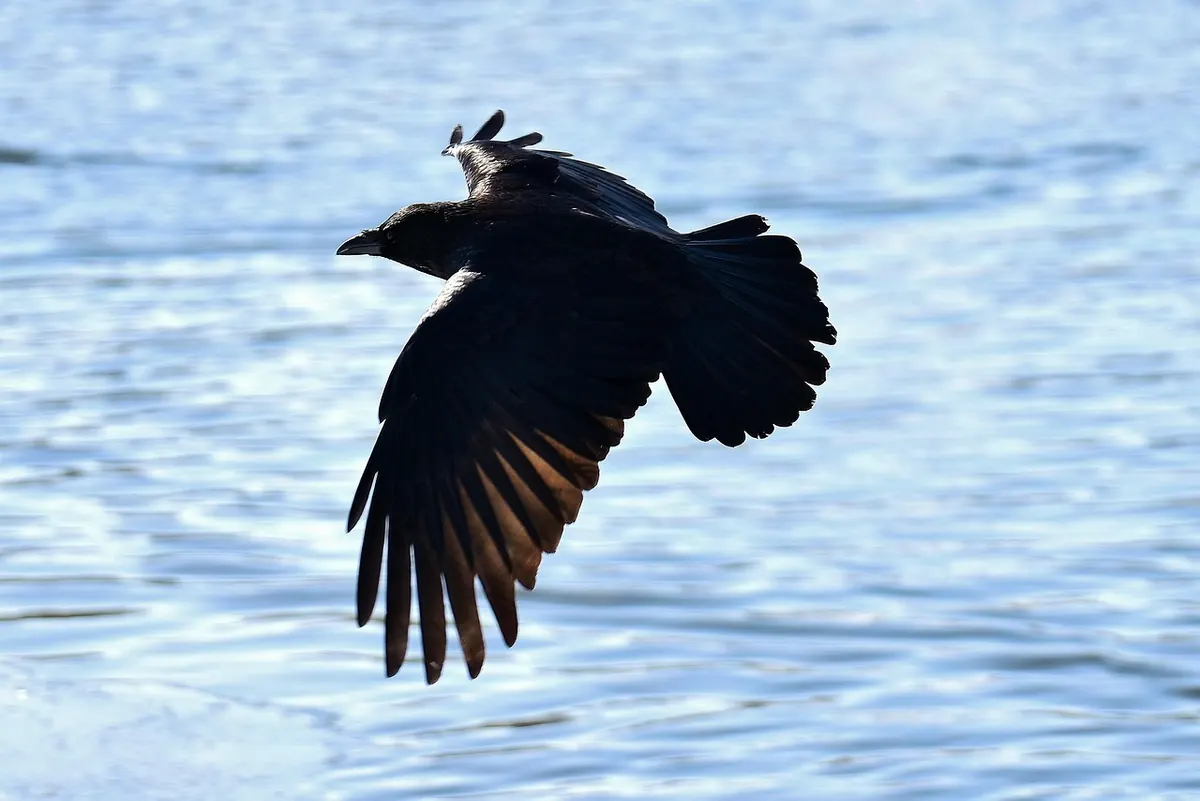
Photo: marcelkessler / Pixabay
Related posts
More stories you’ll love reading