

Sightings
Raven Sightings in the UK: A Month-by-Month Guide to Where and When to Look
September 12, 2026
Ravens have quietly become one of Britain's better wildlife recovery stories. Once pushed back to the crags of the west and north, they now drift over lowland woods, moorland edges and the fringes of towns that had not seen them for generations. The sightings still follow a pattern, though. Get the month and the habitat right and your chances rise sharply; get them wrong and you can spend a whole weekend on a hill seeing nothing but crows. This is a working calendar for the year ahead.
How the raven's year works
Ravens are resident. They do not arrive in spring and leave in autumn, and pairs hold territories all year. What changes is how visible they are, and that is driven mostly by breeding, moulting and food.
They are among the earliest nesting birds in the country, with pairs rebuilding or refurbishing nests in late winter and eggs often laid while frost is still on the ground. That means courtship and nest-building happen in the hardest weather of the year, when there are no leaves on the trees and the birds are at their most aerial and vocal. By high summer they are moulting, quieter and far harder to pin down.
Weather matters too. Ravens enjoy wind and use thermals to climb and soar for long periods. Flat calm, heavy drizzle and low cloud keep them low, silent and largely out of sight.
The month-by-month calendar
- January — Courtship at full tilt. Pairs tumble, roll and chase over ridgelines, and the deep kronk carries across a valley in a way it rarely does later.
- February — Nest building, and in mild districts the first eggs. Watch for birds carrying sticks or wool towards a crag ledge or a tall conifer.
- March — Incubation. Adults stay close to the nest and patrol the skyline, but long soaring flights become less frequent.
- April — Chicks hatch. Parents commute to and from the nest with food, so a bird flying purposefully in one direction is a strong clue.
- May — Fledging. Family parties are noisy and obvious, with young birds begging and trailing adults across moor and cliff.
- June — Families drift away from the nest. Early mornings over upland valleys and coastal cliffs give the best views.
- July — Moult begins. Ravens go quiet and stay low, often feeding on carrion or working along a shoreline.
- August — Young birds wander. Records start appearing well outside breeding areas, including lowland farmland.
- September — Dispersal continues. Reservoirs, estuaries and hill fringes turn up scattered birds, many of them young.
- October — Roosts reform. Small groups gather at dusk on pylons, in quarries and over wooded valleys.
- November — Numbers build at winter feeding grounds. Coastal cliffs, hill sheep country and upland farms are reliable.
- December — Winter gatherings at their peak, and dawn movements of birds heading out to feed are a fine sight.
Winter: the season that suits ravens best
If you only get one window, take December to February. There is no foliage to hide behind, birds travel further to feed, and pairs are locked into display behaviour that makes them careless about people watching from a respectful distance.
Pick a cold, bright morning with a bit of breeze. Walk a ridge, a sea cliff path or the edge of a moor where you can see sky in three directions, then stop and scan. Ravens frequently come to investigate a stationary human on a cairn or a trig point, sometimes flying within a few metres overhead before rolling away sideways.
Dusk is the other good hour. Find a likely roost — a quarry face, a pylon line, a dark block of conifer — and wait quietly for birds to drift in from all directions.
Spring and early summer: nests, crags and family parties
From late February through June your best tactic is to watch nesting behaviour without disturbing it. Ravens nest on sea cliffs and inland crags, in quarries, in tall conifers and occasionally on old buildings. They are legally protected, and birds around a nest are alert to anything that lingers.
Reading the signs
A raven heading steadily in one direction with a full bill is probably provisioning young. A bird circling and calling repeatedly may be reacting to something near the nest. Note the line of flight, keep your distance, and use binoculars rather than your feet. Never approach a nest ledge, and keep recordings and dogs well away in spring.
May is the prize. Young ravens beg loudly and follow their parents almost anywhere, so family parties give prolonged, close views in a way that breeding adults rarely do.
High summer and autumn: young ravens on the move
July and August are the lean months for sightings. The birds are moulting, the hills are busy with people, and ravens stay low and quiet while they feed. Coastal cliffs and upland sheep country remain your best bets, and an early start beats an afternoon every time.
From late August the picture changes. Young birds disperse, and some turn up a long way from any breeding area. Autumn is when lowland Britain gets its ravens: over farmland, along estuaries, above reservoirs and around the edges of woods. If you live in a county with no breeding pairs, September and October are when you are most likely to meet one anyway.
Where to look: the regional picture
Wales remains the stronghold for many birders: Eryri, the sea cliffs of Anglesey, mid-Wales and the Bannau Brycheiniog all hold pairs, and the Elan Valley gives easy access to big sky and crags. Scotland offers the widest choice — the Highlands, the Cairngorms, the west coast and islands, Galloway and the Northern Isles. In northern England, the Lake District, Yorkshire Dales, North York Moors, Forest of Bowland and Northumberland all support birds.
In the south-west, Dartmoor, Exmoor, Bodmin Moor and the Cornish coast are reliable. The Peak District and the Welsh borders are worth a look. Further east, ravens have been spreading into Wiltshire, Hampshire, the New Forest, the Chilterns and beyond.
One honest note: the ravens at the Tower of London are captive, clipped birds and not a wild sighting. Worth a visit, but not the same thing.
Before you go: fieldcraft, timing and good behaviour
Most missed ravens are actually distant crows, so learn the differences before you set out.
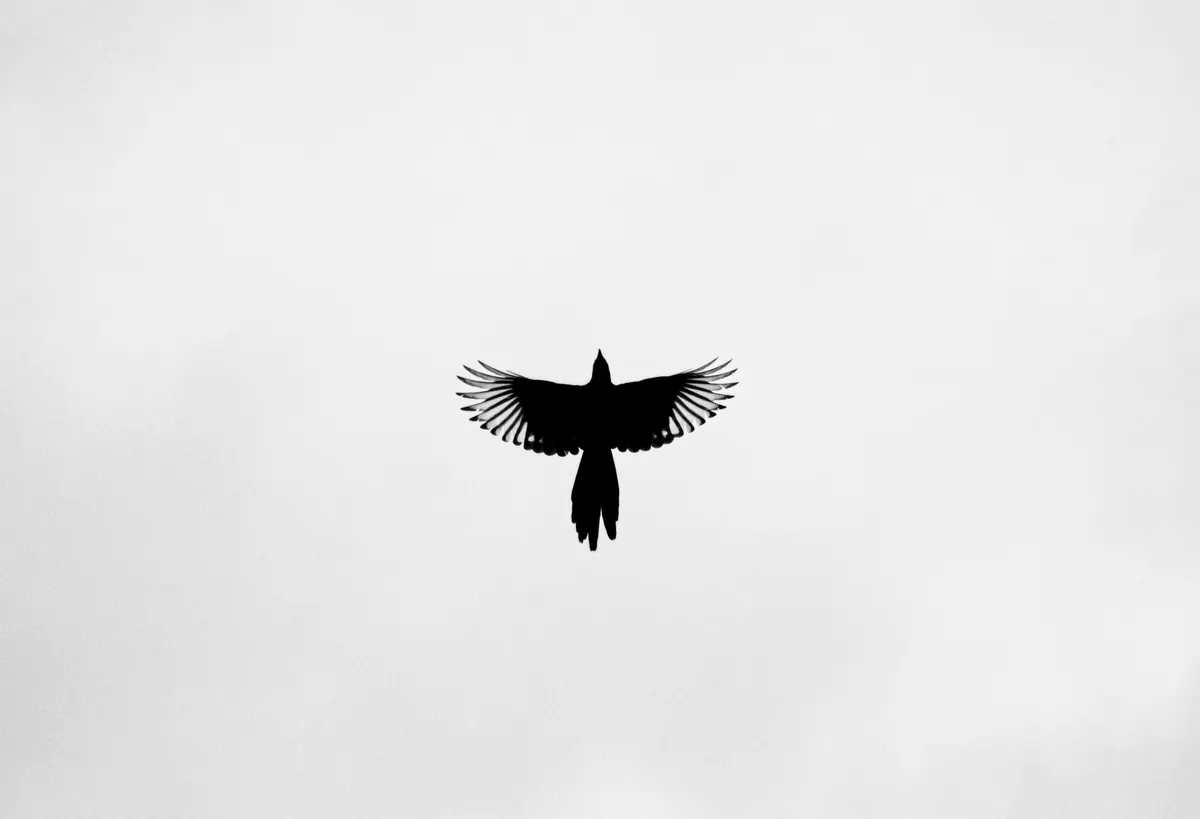
- Size and shape — noticeably bigger than a carrion crow, with a heavier bill, shaggy throat feathers and a long, wedge-shaped tail that looks like a diamond from below.
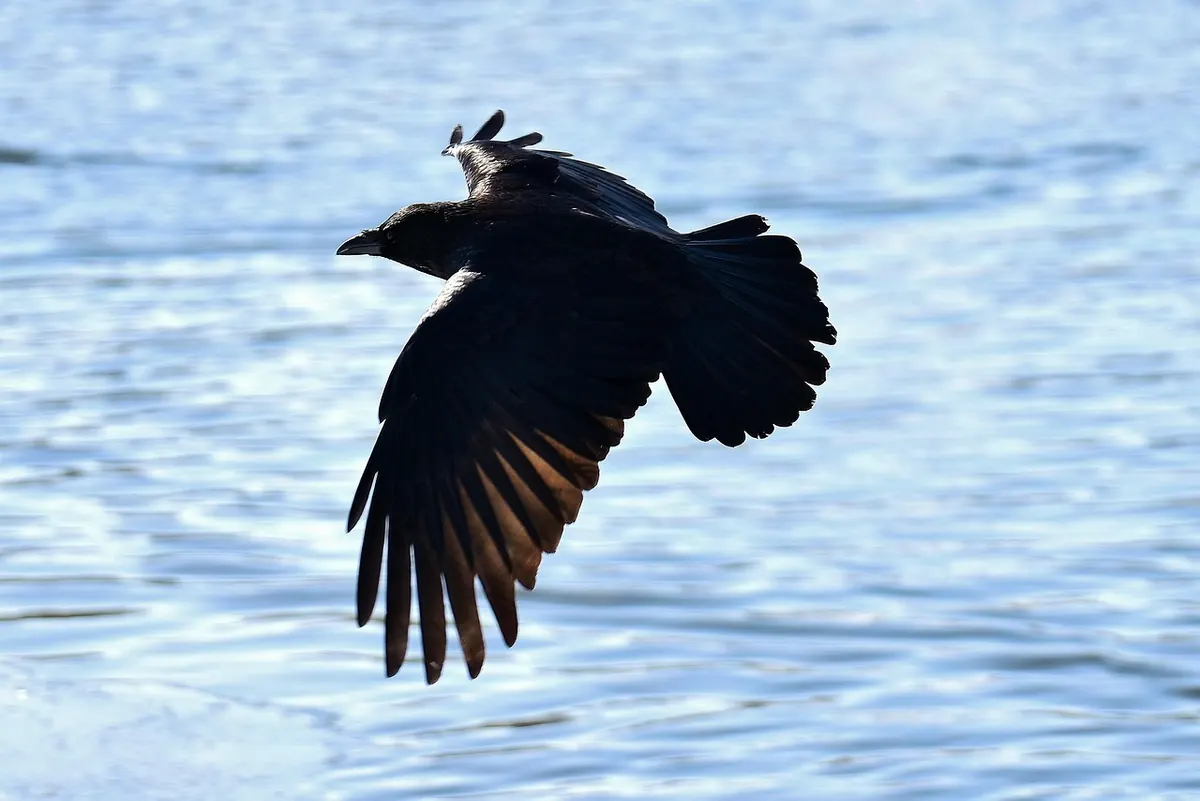
- Flight — ravens soar and glide on flat wings; crows flap almost constantly and rarely hang in the air.
- Call — a deep, resonant kronk or korrk, quite unlike the hard, flat caw of a crow.
- Timing — early morning, and again in the last hour of daylight, are consistently the most productive.
- Kit — 8x42 binoculars, a map or GPS for a grid reference, and waterproofs. You will be standing still for longer than you expect.
- Records — send sightings to your county bird recorder or log them with the BTO's BirdTrack. Local distribution is still being mapped, and your record matters.
Finally, remember that ravens are protected birds. Watch from a distance, give nest sites a wide berth in spring, keep dogs under control on the moor, and let the birds tell you when you have got too close. Do that and they will reward you with some of the best flying in Britain.
Photo: Radik 2707 / Pexels
Related posts
More stories you’ll love reading